
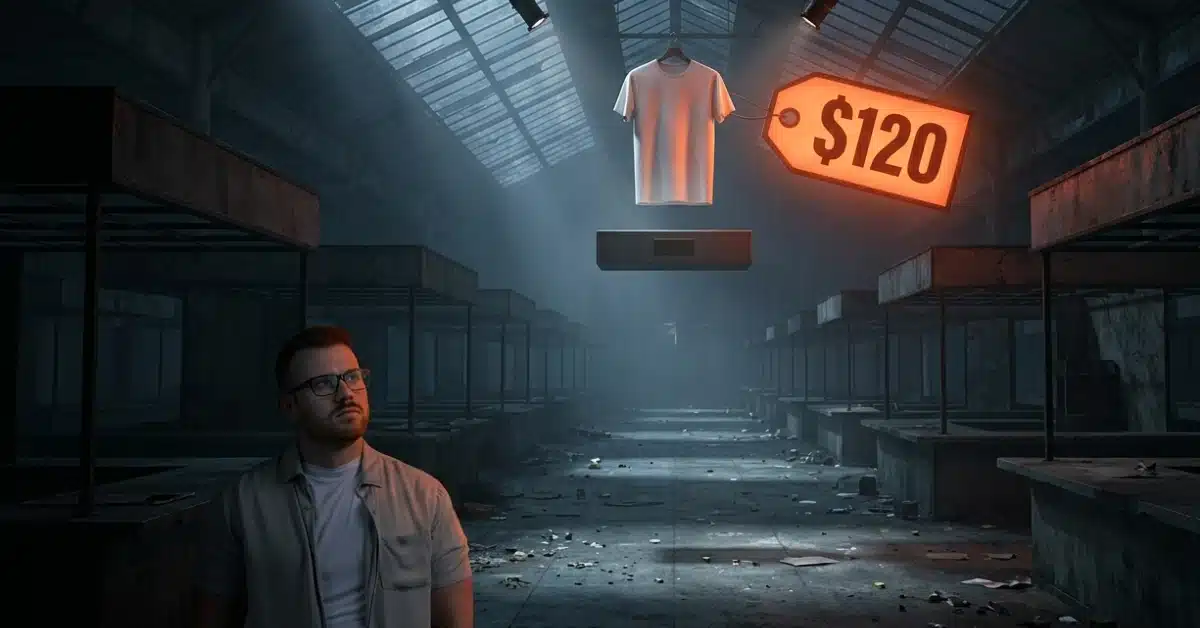
I saw a bloke on my feed the other day trying to sell t-shirts for $120 a pop. Brand nobody’s heard of. Plain tee, logo slapped on, AliExpress written all over it. He was wondering why nothing sold.
The single most common reason a new eCom brand fails isn’t the ads. It’s this. They built a product nobody trusts and priced it like a brand everybody loves.
Here’s the truth most new store owners don’t want to hear. A pretty product on a Shopify store is not a business. People do not see a nice photo and a price and just buy. Not anymore, not in this economy. You have to earn the sale, and most brands skip the earning part entirely.
Why Is My eCommerce Store Not Selling?
Usually because you’ve assumed the product sells itself. It doesn’t.
I see the same pattern constantly. Someone jumps on Shopify overnight, throws a product up, grabs something white-labelled off AliExpress, and tries to sell it for three, four, five times the market price. Then they go on TikTok and tell everyone how hard eCommerce is and how nothing converts.
It’s not that eCommerce is impossible. It’s that they’ve done the easy 10% and skipped the hard 90%. The product going live is the start, not the finish. Nobody knows you, nobody cares about you yet, and no one parts with money for something they don’t care about from a brand they’ve never heard of. That’s not bad luck. That’s the default, and your job is to overcome it.
Can You Actually Sell White-Label Products?
You can, but not the lazy way most people try.
The problem isn’t white-labelling itself. Plenty of real brands started with a sourced product. The problem is white-labelling a basic item, slapping a logo on it, and pricing it like a premium label without doing a single thing to justify the gap. That’s the bit that kills it.
When you put a massive price gap on a no-name product, people don’t just hesitate. They actively dismiss it. They look at $120 for a plain shirt from a brand they’ve never heard of and they go, that’s a load of rubbish, I’m not paying that, and they walk. You didn’t lose the sale on price. You lost it on trust, because you gave them no reason to believe the product was worth it.
How Do You Build Trust for a New Brand?
You sell harder, and you prove more. That’s the whole job.
The brands that actually break through do two things the failing ones don’t. First, they innovate, or at least give people a real reason the product is different and worth it. Second, and this is the one almost everyone misses, they build trust deliberately. They show what the product does. They show why it isn’t a cheap knockoff. They stack up the reasons a stranger should believe them before any money changes hands.
That means your landing page is doing real work, not just sitting there pretty. It means realistic pricing that matches the trust you’ve actually earned, not the trust you wish you had. And it means selling these people over the line properly, because that’s always the hard part, the part the platforms and the courses gloss over. The product, the price and the trust all have to line up. Get one wrong and the other two can’t save it.
The Honest Take
eCommerce is hard. Any clothing brand, any product brand, starting from zero is hard, and I’m not going to pretend otherwise.
But it’s not impossible, and the businesses that make good money all did the same unglamorous things. They did the research first. They priced realistically. They built landing pages that actually sell. They worked on trust instead of assuming a logo and a high price equalled a brand. They took the effort seriously.
You can’t put a product online with a price and expect people to go “oh, that looks nice” and buy. People don’t do that, especially not now. Do the hard 90%, and the ads have something worth running behind. Skip it, and no amount of ad spend saves a brand nobody trusts. If the offer’s right and you want the ads handled, that’s where a Google Ads specialist earns their keep.
FAQ
Why is my new eCommerce store getting traffic but no sales?
Usually trust, not traffic. People land, see a product they don’t recognise at a price they can’t justify, and leave. A new brand has to earn the sale with strong landing pages, realistic pricing and clear reasons to believe before a stranger will buy. Traffic alone never closes that gap.
Can you sell white-label or AliExpress products successfully?
Yes, but not by slapping a logo on a basic item and charging premium prices. The white-labelling isn’t the problem, the missing trust is. You need to justify the price with real differentiation, strong proof and a landing page that sells, or buyers will dismiss it as an overpriced knockoff.
How should I price a new product brand?
Price to the trust you’ve actually earned, not the trust you wish you had. A huge gap between a no-name product and a premium price makes people walk before they even consider it. Start realistic, build proof and reputation, then raise prices as the brand earns the right to charge more.
Why won’t people buy from a brand they’ve never heard of?
Because there’s no reason to yet. Strangers don’t hand money to unknown brands without a reason to believe. They need proof the product does what you say, that it isn’t a cheap knockoff, and that others trust it. Build that case deliberately or the sale never happens.
Do landing pages really matter for eCommerce?
Hugely. The landing page is where you sell people over the line, and for a new brand that’s the hardest and most important step. A weak page wastes every dollar of ad spend driving traffic to it. Invest in pages that build trust, answer objections and make buying easy.
Got the product right but the sales won’t come?
I run paid ads for eCommerce brands across Australia, and I’ll tell you straight whether it’s the ads or the offer holding you back.
Want a second set of eyes on it? Say G’day and we’ll have a proper look.