
I’m going to be straight with you.
I’m not some bloke who read a LinkedIn post about ChatGPT Ads and decided to call himself a specialist. I’ve spent $25M+ on paid ads over nine years across Google and Meta, working with tradies, eCommerce brands, dental practices, finance companies, and more across Australia. When OpenAI started rolling out ChatGPT Ads, I got into it early. Now I’m running live campaigns for clients across Sydney, Melbourne, Brisbane, Gold Coast and Perth.
This isn’t a hype piece. It’s what I actually know from being in the platform.
What Are ChatGPT Ads?
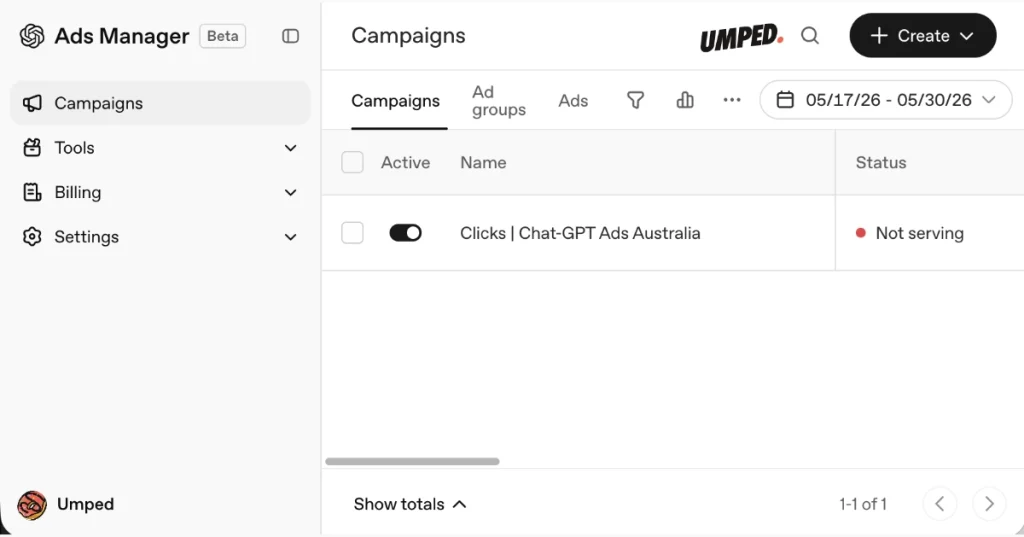
ChatGPT Ads are sponsored placements that appear inside real ChatGPT conversations. OpenAI built a self-serve ads manager – similar in structure to Google Ads Manager or Meta Ads Manager – and rolled it out to Australia in early 2026 after piloting in the US.
The ads show up for logged-in adult users on the Free and Go tiers. They’re clearly labelled as “Sponsored” and sit visually separate from ChatGPT’s actual responses. OpenAI isn’t trying to sneak them in as AI-generated answers. They’re transparent placements inside a live conversation.
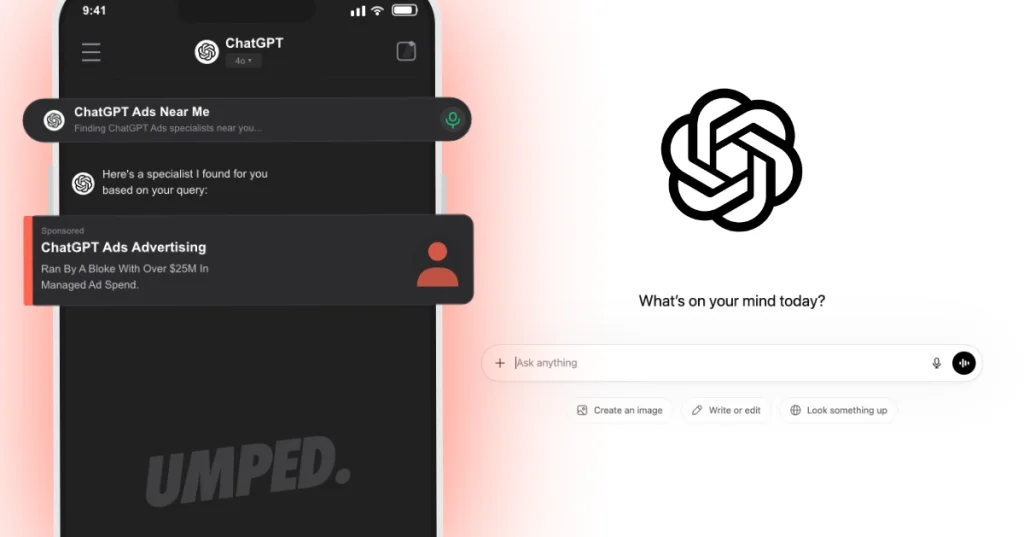
The critical difference from everything else you’ve run before: these ads appear while someone is mid-conversation. Not before a search. Not beside a result. Inside the conversation itself, at the exact moment the person is actively researching, comparing, and deciding.
That’s a completely different beast.
How ChatGPT Ads Actually Work
The ads are matched contextually to whatever the user is chatting about at that moment.
Someone in Sydney is asking ChatGPT to help them compare kitchen renovation companies. A renovation business’s ad can appear right there. Someone in Melbourne is researching dental implant costs and asking follow-up questions about financing options. A dental clinic’s ad shows up in that moment. A person in Brisbane is describing their blocked drain situation and asking who to call. Your plumbing ad is right there in the conversation.
You don’t see what individuals are typing. OpenAI doesn’t hand over personal conversations or user data. What you get back is aggregated performance data: impressions, clicks, conversions. Enough to optimise properly.
Bidding runs on CPC (cost-per-click, $3 to $5 recommended) and CPM (cost per thousand impressions) depending on your campaign objective. Conversion tracking runs via Conversions API and pixel, the same infrastructure you’d know from Meta, and it went live across all markets including Australia in May 2026. You buy through the self-serve Ads Manager at ads.openai.com, or through an agency.
This Is What Real Intent Looks Like
Google Ads captures intent. ChatGPT captures intent with context, and that’s a completely different thing.
On Google, someone types “plumber Sydney.” You get a keyword. Seven words at best. You have no idea if they’ve got a blocked drain, a leaking pipe, a renovation project, or if they’re just pricing something up for next month.
On ChatGPT, that same person types: “I’ve got a blocked drain under the house in Penrith. It’s been three days. I’m renting and my landlord is useless. What should I do and how much is this going to cost me?”
They’ve handed over the problem, the location, the timeline, the emotional state, and the urgency. All of it. In one message. Before they’ve clicked on a single thing.
For a bloke like me who has spent years trying to read intent from short-tail search queries, that level of signal in a single conversation is genuinely something else. Karen from AgencyLand is still writing blog posts about broad match keywords while this platform is sitting here wide open.
Who Is Using ChatGPT in Australia Right Now
ChatGPT has over 500 million weekly active users globally. Australian usage more than doubled over the last 12 months.
This is not a teenage audience. It’s professionals, business owners, and consumers who have shifted a meaningful chunk of their research behaviour away from Google and into AI chat. They ask follow-up questions. They describe their full situation. They compare options in detail before they click anywhere.
Your customers are in there. Right now. Asking things that are directly relevant to what you sell.
The businesses that get in front of them during that conversation are the ones that win the lead.
What Does It Cost to Run ChatGPT Ads in Australia?
The platform is early, and early means cheap relative to what it will cost in 12 months.
CPMs (cost per thousand impressions) dropped sharply since the US pilot. They’re sitting roughly between $25 and $60 as of May 2026, down from a flat $60 at launch, and CPC bidding now runs $3 to $5 a click. On a straight CPM comparison, that’s pricier than Facebook. But Facebook is serving your ad to someone mid-scroll through their feed on autopilot. ChatGPT is serving your ad to someone deep in a research conversation about exactly what you sell.
The intent differential makes the CPM comparison irrelevant.
There’s no minimum spend anymore, OpenAI removed it in May 2026. As a practical starting guide though, $1,500 a month gives you enough volume and data to actually optimise. If you’re in a high-value industry (roofing, dental, finance, renovation, legal, mortgage broking) you’ll want more. The earlier you get in, the cheaper the inventory and the less you’re fighting for placement against anyone.
In 12 months, every agency in Australia will have a ChatGPT Ads page on their website. Most of them will have copied this idea from someone who was early. Right now, barely any are actually running live campaigns.
Can You Target Specific Cities?
Not yet. Geo-targeting is currently Australia-wide only. You can’t target Sydney, Melbourne, Brisbane, or a specific suburb like Penrith or Footscray at this stage.
OpenAI has flagged granular geo-targeting is on the roadmap. When that rolls out, the platform gets significantly more powerful for local service businesses — tradies, dentists, physios, lawyers, anyone whose customers are location-specific.
The play right now is to get campaigns running, build performance data, and be ready to tighten targeting the moment it’s available. The businesses already optimising at a national level will have a serious head start on structure and creative when local targeting drops.
Is ChatGPT Ads Right for Your Business?
If your customers research before they buy or book, the answer is yes, look at it seriously.
The common thread across every client I work with on ChatGPT Ads is that their customers ask questions before converting. That’s exactly the behaviour this platform captures.
Industries seeing clear opportunity right now:
- Trades (plumbing, electrical, roofing, renovation, air conditioning)
- Dental and healthcare
- Finance and mortgage broking
- Legal services
- Kitchen and bathroom renovations
- eCommerce where customers compare before buying
- Real estate and property services
- Professional services of any kind where trust matters
Where it’s trickier right now:
- Hyper-local businesses that need suburb-level targeting (wait for geo-targeting to roll out)
- Very low average order value products with tight margins
- Pure impulse purchases where no research happens
If you’re not sure which bucket you fall into, ask me directly and I’ll give you a straight answer.
ChatGPT Ads vs Google Ads: Do You Pick One?
No. They’re different moments in the same buying journey.
Google Ads captures someone who already knows what they want and is actively searching for it. Short query, results page, click, conversion. The intent is real but the context is minimal.
ChatGPT Ads captures someone who is still working out what they want. They’re describing their situation, asking follow-ups, comparing options. The conversation is longer. The depth of engagement is completely different. Your brand appears right inside that decision-making process.
For every client I run ChatGPT Ads for, Google stays on. They’re not competing. A customer might search on Google, later ask ChatGPT for a recommendation, then see a retargeted Meta ad the next day. Each touchpoint stacks. Each one moves them closer.
Does every business need all three right now? No. But if Google is already working for you and you’re looking for a second high-intent channel while the competition is essentially zero, ChatGPT Ads is the obvious next move.
What Does a ChatGPT Ads Setup Actually Cover?
This is what competent management looks like, for anyone who’s wondering:
- Campaign and ad group structure built around your actual business objectives
- Ad creative written for conversational context, not just repurposed Google copy
- Conversion tracking setup
- Ongoing performance review of aggregated data to identify optimisation signals
- Monthly reporting on real KPIs: impressions, CTR, CPC, conversion rate, cost per lead or sale
- Honest feedback on what the numbers are showing, including when to scale and when to hold
There’s no official ChatGPT Ads certification from OpenAI. They haven’t built one. Being early and running real campaigns with real spend is the credential. It’s not by fluke that the businesses I work with get results on new platforms fast.
The Window Is Open Right Now
Every major ad platform has a window.
Facebook Ads in 2012. Google Ads in the early 2000s. TikTok Ads in 2020. The businesses that got in during those windows built advantages that took competitors years to close. The ones who waited until it was obvious paid significantly more and fought significantly harder for the same placements.
ChatGPT Ads in Australia is that window. Right now. In 2026.
The businesses running campaigns today are building data, refining creative, and learning the platform’s optimisation signals while their competitors have genuinely never heard of it. When the platform matures and every agency in the country is pitching it, the early movers will have a two-year head start.
That head start is still available right now.
Frequently Asked Questions
What is ChatGPT Ads?
OpenAI rolled out a self-serve advertising platform that places sponsored ads inside ChatGPT conversations. They’re clearly labelled as “Sponsored,” visually separate from the AI’s actual responses, and matched contextually to whatever the user is discussing. They launched in the US first, then expanded to Australia in early 2026.
Do ChatGPT Ads work for small businesses?
Yes. OpenAI built the self-serve platform specifically for businesses of all sizes, not just big brands with large budgets. The real advantage for small businesses right now is that almost nobody in Australia is running them. Minimal competition, lower CPMs, and you’re reaching an audience that is deep in a research conversation about your exact category.
How much does it cost to start?
There’s no minimum spend, OpenAI removed it in May 2026, so technically you can start with any budget. Practically, put at least $1,500 a month behind it so there’s enough volume and data to optimise. High-value industries (dental, roofing, finance, legal, renovation) typically need more. The sooner you start, the cheaper the inventory.
Can you target Sydney, Melbourne or Brisbane specifically?
Not at this stage. Geo-targeting is currently Australia-wide. OpenAI has flagged more granular local targeting is coming. When it does, the platform becomes significantly more powerful for location-specific service businesses.
How are the ads labelled inside ChatGPT?
They’re clearly marked as “Sponsored” and sit visually apart from ChatGPT’s actual responses. They do not appear as AI-generated answers and they don’t try to impersonate organic responses.
Can ChatGPT Ads run alongside Google and Meta?
Absolutely. That’s exactly how I run it for clients. Multiple channels, multiple touchpoints, stacked across the buying journey. No contracts, no lock-in, no fluff.
I’m not in Sydney. Can you still help?
100%. I’m based in Sydney but most of my clients are in Melbourne, Brisbane, Gold Coast, Perth, Adelaide and beyond. Location is irrelevant. Results aren’t.
Want In While the Door’s Still Open?
ChatGPT Ads are live in Australia. The competition is thin. The intent is real. And the businesses getting in now are the ones who’ll own the placements when this platform matures.
If you want to work out whether it’s right for your business, say G’day here and we’ll have a straight conversation about it.
No contracts. No middlemen. No fluff.